
Where to watch birds on windy days in and around the strait of gibraltar?
Wind is an extremely powerful force in the Strait of Gibraltar, imposing and unpredictable. The two main components for the wind direction in this region are east and west, corresponding to the almighty, almost legend-deserving status Levante, and the softer, fresher and more stable Poniente, respectively.
The detectability of birdlife is naturally very much affected by these conditions, both in their migratory dynamics and their local behaviour – a whole parallel topic, deserving of a forthcoming post. With gales of up to 40 knots of Levante, birds become much tougher to see and hear, optics harder to hold still, and patience seriously challenged. Heat haze is no birder’s friend either, and the continuous shaking of trees and bushes does not help at all. So that’s why from Birding The Strait, we wanted elaborate a list of the handiest places for birding around the Strait of Gibraltar on windy days.
Algarrobo migration watchpoint
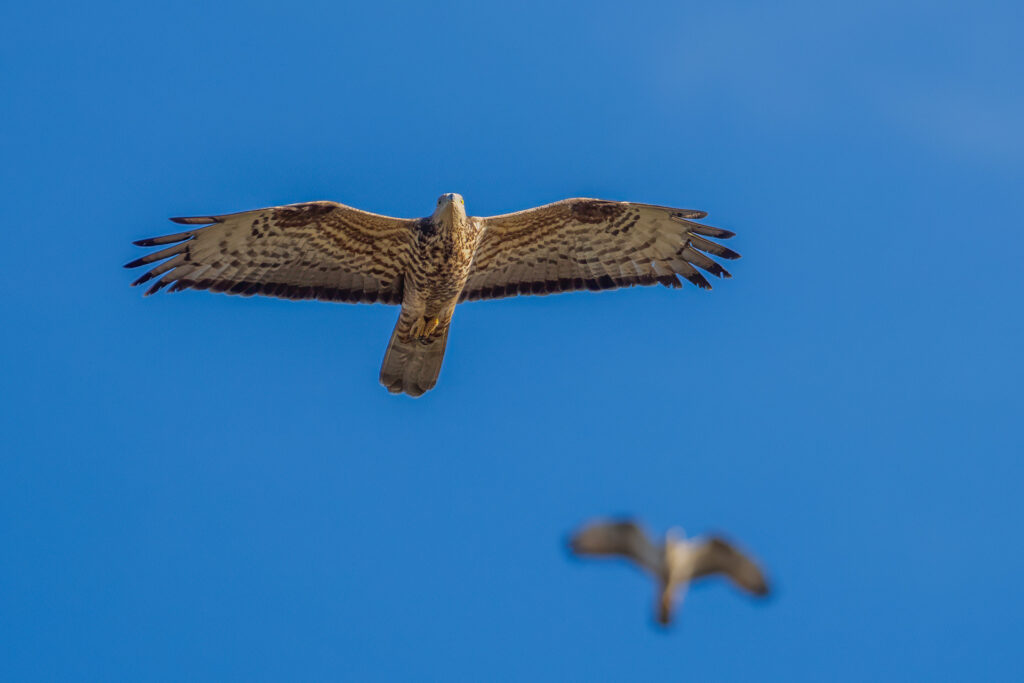
ALGARROBO WATCHPOINT
At just 12 kilometres from the narrowest gap to Africa, Algarrobo watchpoint consists of a concrete structure as shade, strategically situated at the hill foot of Los Alcornocales Natural Park. This position overviews an extense area of mediterranean forest, the Bay of Algeciras, and the coastal hills to the south. As easterlies accelerate once past the bottleneck to te west, the eastern position of this valley is usually well sheltered from the wind, which just begins to strengthen some distance to its west.
Although it is typically best with westerlies in autumn, the surroundings of Algarrobo can accumulate massive amounts of Short-Toed and Booted Eagles, among many other raptors, during periods of strong Levante and particularly in the month of October. This is also a fantastic location to search for sedentary species like Bonelli’s and Spanish Imperial Eagle, and a regular spot for the rare Rüppell’s Vulture. The zigzagging valleys to the south of the observatory serve as refuge for raptors that wait for the wind to cease, gathering hundreds of soaring raptors with the right conditions.
Both the access to Algarrobo and the surrounding areas can result tricky for the visitor, for whom a guided day trip might be a perfect option.
Barbate marshes
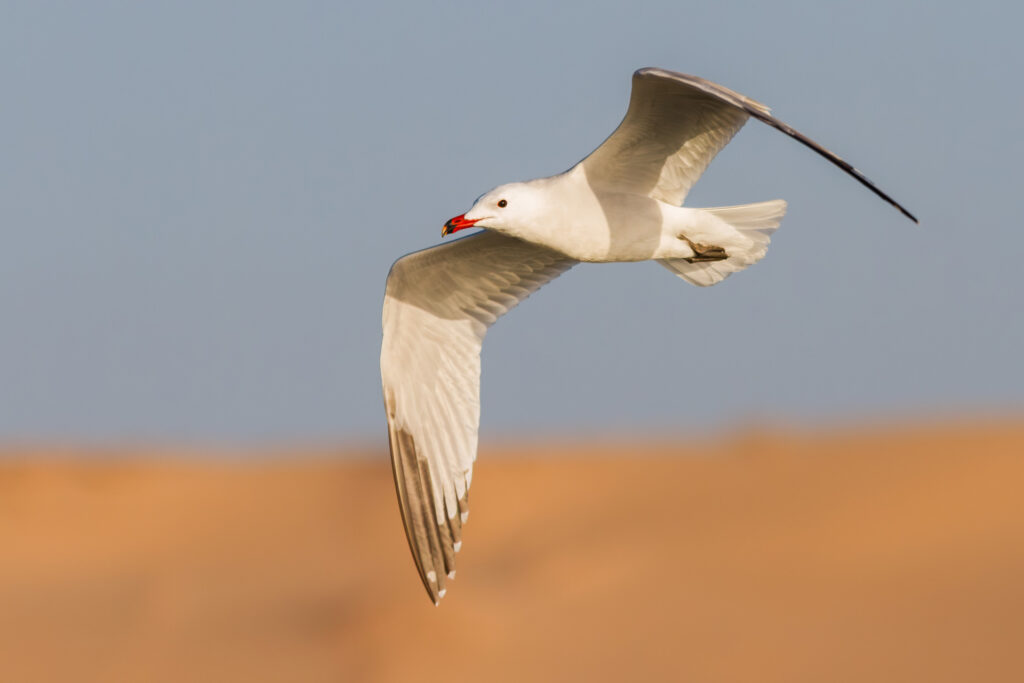
Located in the north-western edge of the Strait and at barely 45’ drive of Tarifa, the marshes at the Barbate river mouth can be surprisingly well sheltered from the wind, specially in the early morning. El Cañillo, easily accesible from the main road Zahara – Barbate, offers a vast diversity of birds, that forage in an extension of restored saltpans strategically located to the northwest of a hilly area. During spring and summer, Greater Short-Toed Larks, Little Terns, and swarms of Collared Pratincoles can be seen flying everywhere around, their breeding colony close.
During the winter, the discreet Eurasian Thick-knee can be found resting in small groups in the bushy islets, and Audouin’s Gulls gather daily to rest. Year-round, flocks of Flamingos and Spoonbills wade anywhere in the area, Calandra Larks sing in the nearby hills, and numerous groups of many species of waders forage in the muddy shores. Occasionally, the Northern Bald Ibises from the nearby colony visit the cow ranches next to the marshes. If your visit coincides with the low tide, the mudflats at the river mouth usually gather big numbers of waders, gulls, and occasional Ospreys, Caspian Terns…
Laguna de Medina
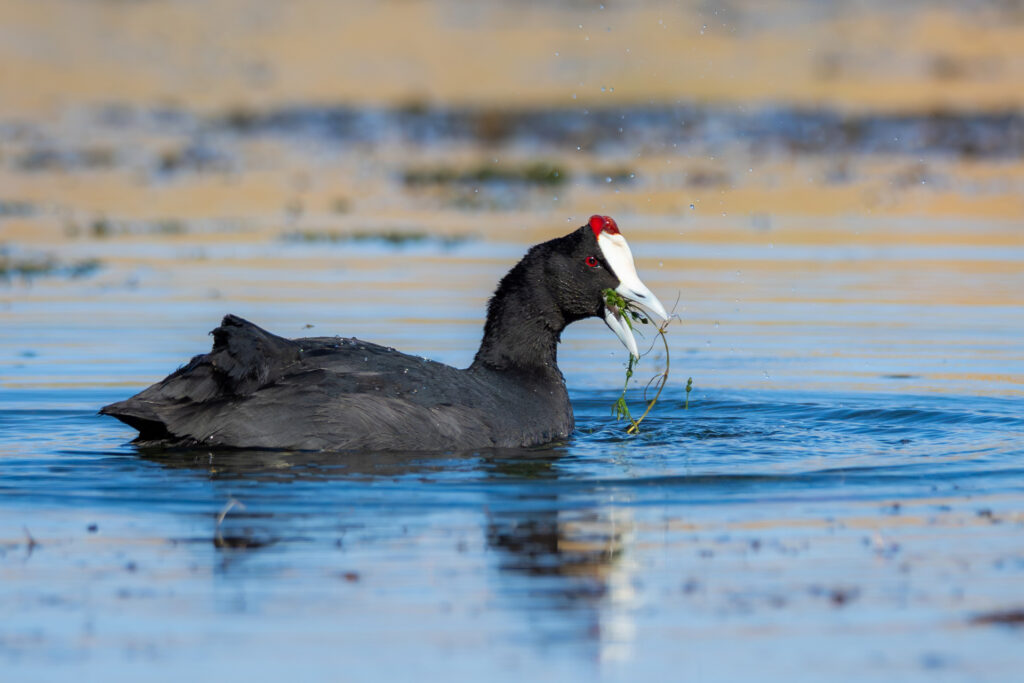
With strong Levante hitting the whole region of the Strait, the search for local specialities, raptors of passerines, can turn into an uncomfortable task. Luckily and with just the humble aid of a car, the wind-tunnel of the Strait is easy to flee heading northwest. At less than a 1h 30’ drive from Tarifa, the Laguna de Medina hosts a rich and numerous waterfowl population, starring species rarely found in the Strait area: Ferruginous Duck, Red-knobbed Coot, White-Headed Duck, Red-Crested Pochard… among hundreds if not thousands of Eurasian coots, Northern Shovelers, etc. The Lagoon offers an easy boardwalk concealed by bushes, that connects a couple watching huts, apart from many different spots from which the observer can easily scan the lagoon by scope. Wind can still be substantial at this place (and specially heat) but it is a brilliant option if the easterlies make birding in the Strait suboptimal.
You can learn more about this privileged location through this link.
Southern Doñana
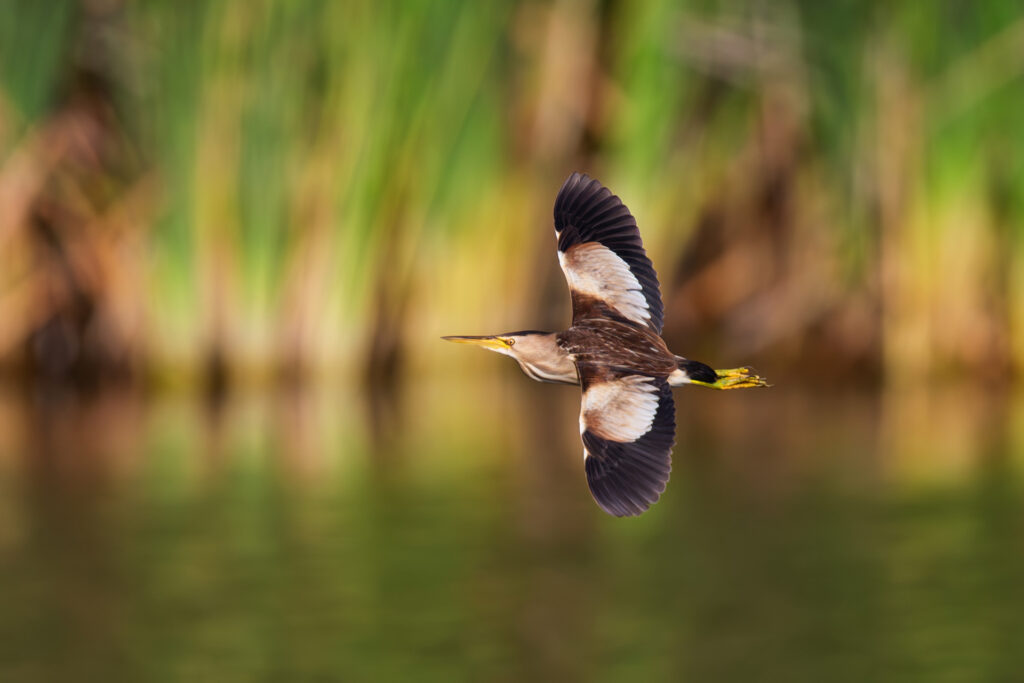
The northwestern edge of Cádiz province presents a variety of wetland areas, some of them deeply concealed within the urban-agricultural maze between the towns of Chipiona and Sanlúcar. Belonging to the southern edge of Doñana National Park, the ecological particularities of this area offer prime habitat for certain pond species like White-Headed Ducks, Marbled Teals, Red-Knobbed Coots… A numerous community of Squacco and Black-Crowned Night Herons lives in the tamarisk bushes bordering the freshwater ponds, and occasional Little Bitterns can be seen darting in between the reedbeds.
Out in the saltpans by the river banks, Flamingos and Spoonbills forage on the water surface, and, at the right time of the year, massive flocks of Calidris Sandpipers (Dunlins, Little Stints and Curlew Sandpipers, among others) feed on the shallow extensions of mudflat. The drier, salty areas with scattered bushes host a small sedentary population of the scarce, but locally common Mediterranean Lesser Short-Toed Lark.
In combination with these spots, the beach of Montijo, easy to access from Sanlúcar town, offers outstanding views of Waders, Terns, Slender-Billed Gulls, and regular sightings of Parasitic Jaegers, specially during mid-low tide periods.
Cetina marshes
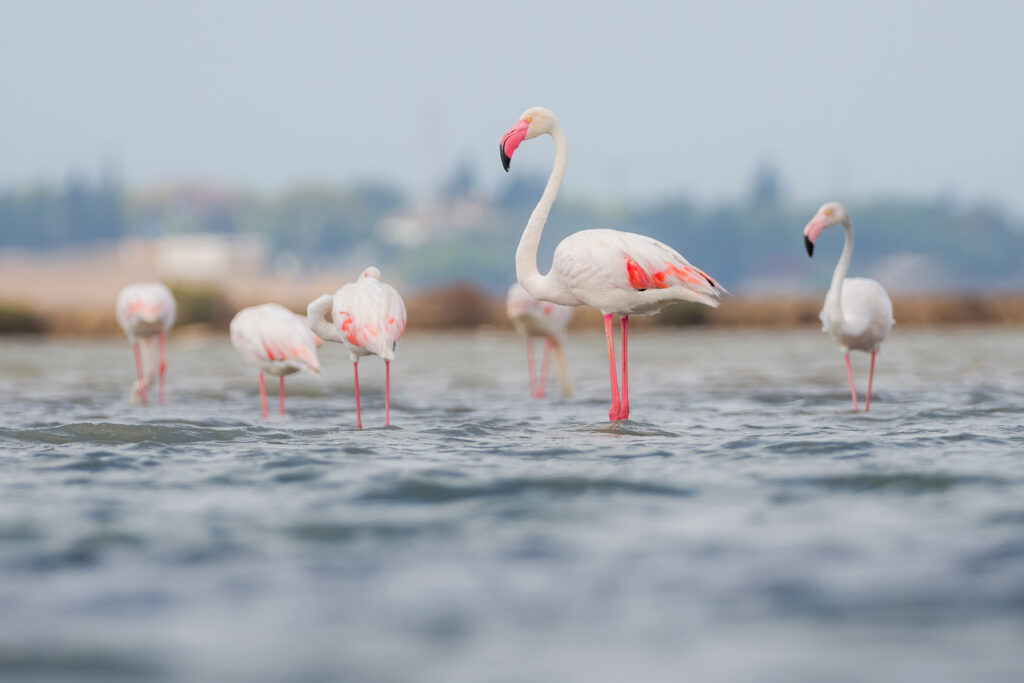
The Cetina saltmarshes are easy to reach by car from Tarifa, after hardly an hour on the road. This natural preserve consists of a single, straight road traversing a vast surface of saltpans affected by tide. The Iberian Green Woodpecker can be heard and seen in the pine patches near the entrance. Depending on the year, a few singing Savi’s Warblers can be seen singing right past during the spring and summer, in a freshwater area where reeds and high weeds are predominant.
Driving some distance into the marsh, we will be able to find various species of waders found depending on the season. Flocks of Avocets and Black-Winged Stilts are present year-round in good numbers, And Black-Tailed Godwits, Dunlins and Little Stints stage in this areas mostly during the passage and wintering season. You can obtain great views of waders from the car, with birds feeding on the nearby shore undisturbed. Looking at the opposite side of the road, charming groups of both Greater and Mediterranean Short-Toed Larks sing and flutter in their plain and dry habitat. A few pairs of Spectacled Warblers breed annually in this area.
The access gate to Cetina marshes is permanently closed for cars, so asking permission for entrance with a vehicle is a must. As regular visitors, in Birding The Strait we can easily obtain the permits for guiding purposes in this privileged area.
During our excursions, we cover with expertise all the areas mentioned. We’ll be happy to design the itinerary that best adjusts to your interests! Don’t hesitate to take a look to our guided excursions in our website. If you would like to know more about the possibilities that the Strait of Gibraltar offers, we recommend you to take a look at their official website: Stay tuned!